

Industrial
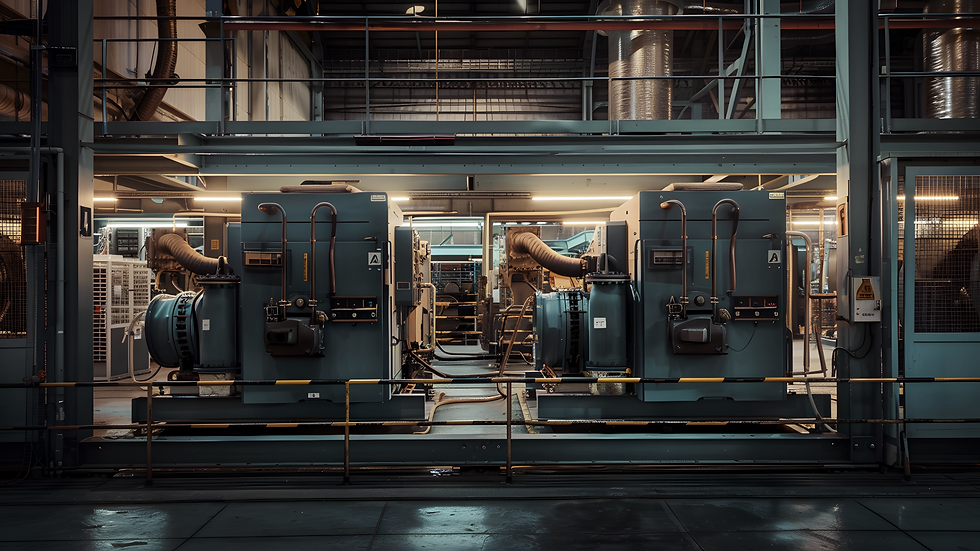
Light manufacturing runs 150–400 kW. Heavy manufacturing can exceed 2 MW. Motor startup loads of 2–3x running wattage are the design constraint most systems are undersized for.
Industrial
Industrial Power Systems Built for What Production Actually Demands
Light manufacturing runs 150–400 kW. Heavy manufacturing can exceed 2 MW. Motor startup loads of 2–3x running wattage are the design constraint most systems are undersized for.

Overview
Industrial systems are typically tested at no load or light load—not under the simultaneous motor-start conditions that occur when production resumes after an outage.
We test industrial systems under conditions that simulate actual production demand—not idle startup. Load bank testing at 50–100% of expected demand identifies instability, overheating, and fuel delivery issues before they show up during an actual outage.
Where Industrial Backup Systems Fail
Undersized systems: pass startup testing, fail when production motors engage
No load sequencing: all motors start simultaneously, spike exceeds generator capacity
Fuel degradation: diesel systems in standby mode degrade in 6–12 months without active management
Cooling failure under sustained load: systems sized for startup but not extended production runtime
Electrical faults during high-demand transitions from utility to generator power
Load-Tested Systems That Perform at Peak Production Demand
Load-Tested Systems That Perform at Peak Production Demand
We test industrial systems under conditions that simulate actual production demand—not idle startup. Load bank testing at 50–100% of expected demand identifies instability, overheating, and fuel delivery issues before they show up during an actual outage.
Requirements
Industrial backup power requirements are driven by equipment category, operational priority, and whether the facility needs full production continuity or emergency-only coverage.
Industrial sizing is driven by motor load and startup demand—not facility size. Here's the breakdown by operation type.

calculate your power
Know Exactly What It Takes to Keep Power On
From essential backup to full-scale operations—get a clear, grounded recommendation based on how your property actually runs.


CALCULATE YOUR POWER
FAQ
How do I determine the right generator size for an industrial facility?
Industrial generator sizing is based on total connected load, startup demand, and operational priority — not square footage.
Start by identifying:
Critical systems (must stay running)
Full production vs partial operation
Motor-driven equipment and startup loads
Examples by facility type:
Light manufacturing (20,000 sq ft):
Lighting + controls: 10,000–20,000W
Small machinery: 50,000–150,000W
HVAC: 20,000–50,000W
⚡️ Typical generator: 150–400 kW
Heavy manufacturing (50,000+ sq ft):
Large motors and equipment: 200,000–800,000W+
Production lines: variable load depending on process
⚡️ Typical generator: 500 kW – 2 MW+
Warehouse / distribution center:
Lighting: 20,000–50,000W
Conveyor systems: 50,000–200,000W
Dock equipment and systems: variable
⚡️ Typical generator: 100–500 kW
⚡️ What this means:
Industrial loads are driven by equipment, not building size
Motors and machinery create high startup demand, often 2–3x running load
Undersized systems may start but fail when equipment cycles on
Use a generator sizing calculator to estimate your load based on your equipment and operations
CONTACT
Reliable power
doesn’t happen by accident.
Whether you’re planning a new generator, upgrading what you have, or making sure it performs when it counts, we’ll help you get it right.
+123-456-7890


